
What is Earthwork in Construction?
July 23, 2026
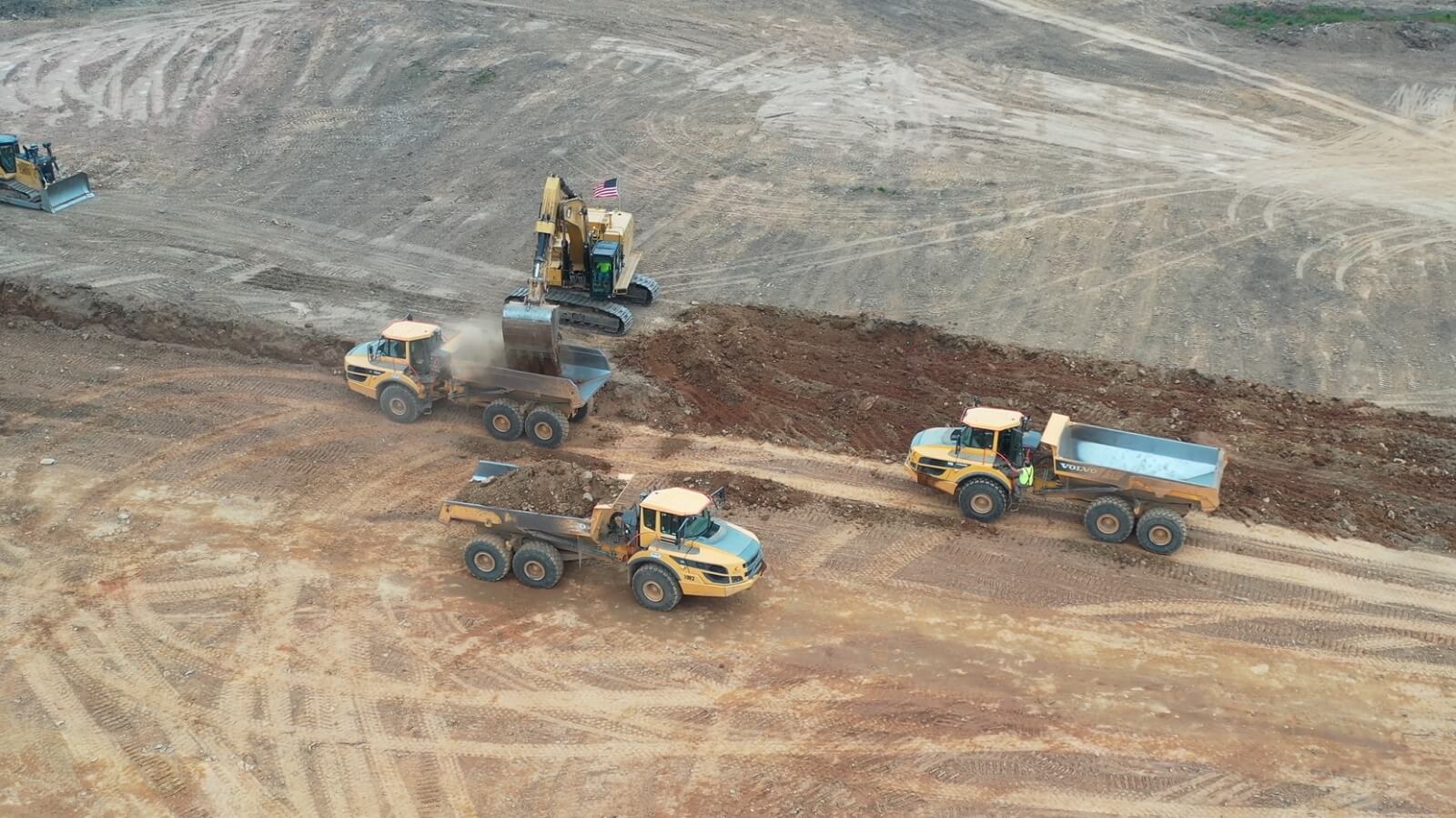
The Foundation of Construction: Understanding Earthwork
Quick answer: In civil site construction, earthwork is one of the first major phases of site development. After erosion and sediment controls are installed, contractors begin excavating, grading, filling, and compacting the site to create the proper elevations and a stable foundation for everything that follows. Earthwork in construction is the process of moving, moving, shaping, and compacting soil and rock to prepare a site for building.
Before utilities are installed, concrete or pavement is placed, the site must be carefully prepared by earthwork crews. The quality of the finished project is directly influenced by the quality of the earthwork completed at the very beginning.
Mass earth excavation is the process of transforming existing ground into a site that is safe, stable, and ready for construction. Through excavation, grading, filling, and compaction, contractors create the proper elevations, drainage patterns, and structural support needed for everything that follows. Without properly executed earthwork, even the best-designed project can experience settlement, drainage issues, and costly repairs.
What Are the Key Earthwork Processes?
Earthwork is a continuous process of excavating, moving, placing, and compacting soil to achieve the elevations shown on the construction plans. In civil site development, cutting and filling often occur simultaneously as contractors balance material across the site, reducing the need to import or export soil whenever possible.
Excavation (Cutting)
Excavation is the removal of soil and rock from high areas, building pad locations, utility trenches, and other designated areas. The excavated material may be reused elsewhere on the project as fill, hauled off-site if it is excess or unsuitable, or replaced with imported material when additional fill is needed. The goal is to efficiently manage material while achieving the site’s design elevations.
Cut and Fill Operations
Rather than treating excavation and filling as separate activities, civil site contractors often perform them simultaneously. Material cut from one portion of the site is transported directly to lower areas that require fill. This “cut and fill” process helps balance the site, reduces trucking costs, minimizes waste, and improves overall project efficiency. When a site cannot be balanced, excess material is exported or additional fill is imported to achieve the required grades.
Grading
Grading shapes the site to the final design elevations and drainage patterns shown on the plans. This includes establishing building pads, roadways, parking lots, slopes, swales, and subgrades for utilities and pavement. Accurate grading ensures proper drainage and provides the foundation for every phase of site development.
Compaction
Fill material is placed in controlled layers, called lifts, and compacted using heavy equipment. Each lift is compacted to the density required by the project specifications before additional material is placed. Proper compaction improves soil strength, reduces future settlement, and creates a stable foundation capable of supporting roads, utilities, foundations, and other infrastructure.
What Are the Main Types of Earthwork Operations?What Are the Main Types of Earthwork Operations?
Earthwork operations vary from project to project, but most civil site development projects include the following activities:
1. Site Clearing and Grubbing
Before any earthwork begins, the site must be cleared of trees, brush, vegetation, tree stumps, and other surface obstructions. . This creates a clean slate for the mass excavation work ahead.
2. Topsoil Stripping
After clearing and grubbing, the topsoil is stripped from the construction area. Because topsoil contains organic matter that cannot support structures, it is removed before mass excavation begins. Depending on the project, stripped topsoil may be stockpiled on-site for final landscaping or hauled off-site for reuse elsewhere.
3. Mass Excavation (Cut and Fill)
Mass excavation establishes the site’s overall elevations by cutting material from higher areas and using it to fill lower areas whenever possible. Contractors continually balance cut and fill across the site to minimize importing or exporting material. When the site cannot be balanced, excess material is hauled off-site or additional fill is imported to achieve the required grades.
4. Grading Grading
Grading fine-tunes the site to the elevations, slopes, and drainage patterns shown on the construction specifications. Grading crews prepare building pads, roadways, parking lots and other site improvement areas for concrete and paving operations. A properly graded site ensures adequate drainage and a uniform surface for construction.
5. Trenching and BackfillingTrenching and Backfilling
Trenches are excavated for storm, sanitary, water, electric, gas and other communication utilities. Once those utilities are installed and inspected,the trenches are carefully backfilled and compacted to restore soil stability and provide long term support.
What Heavy Equipment Is Used in Earthwork ??
Earthwork projects rely on specialized heavy equipment to excavate, move, grade, and compact large volumes of soil efficiently. The type of equipment used depends on the project’s size, soil conditions, haul distances, and production goals. Common earthwork equipment includes
- Excavators — Used to excavate large quantities of soil and rock with precision. Excavators can also load trucks, place pipe, remove unsuitable material, and perform precise digging around existing utilities.
- Bulldozers — Used to push soil, strip topsoil, spread fill, rough grade sites, and move material short distances. Dozers are often the first machines on-site during earthwork operations.
- Tractor Scrapers — Ideal for large earthmoving operations, scrapers cut, load, haul, spread, and partially grade material in a single pass. They are commonly used on large site development and roadway projects where material can be moved efficiently across the site.
- Articulated Off-Road Trucks — Used to haul large quantities of soil, rock, and other materials across rough terrain where on-road trucks cannot safely operate.
- Motor Graders — Used to create smooth, finished surfaces that meet exact elevation specifications.
- Compactors (Vibratory Rollers) — Used to compact soil and aggregate in controlled lifts to achieve the density required by the project specifications and reduce future settlement.
The Unseen Foundation of Every Successful Project Successful Project
Earthwork is never the most visible part of a construction project — but it is arguably one of the most important. From clearing and grading to mass excavation and compaction, every operation plays a role in creating a stable foundation for the infrastructure that follows.
At Schlouch Incorporated, we understand that successful site development starts from the ground up. By combining experienced people, specialized equipment, and proven construction practices, we help deliver projects that are built on a solid foundation from day one. Interested in building the foundation for great projects? We’re always looking for talented people who take pride in quality work. Explore our current career opportunities and become part of the Schlouch Incorporated team. If you have the experience Schlouch Incorporated is looking for, check out our position listings.
Have an upcoming construction project that requires earthwork? Contact Schlouch Incorporated today to discuss how we can support your next build.