Everything You Need to Know About OSHA Forklift Training
February 03, 2026
OSHA Forklift Training: A Complete Guide for Safety and Success
Heavy equipment is the backbone of the construction and mining industries. These powerful tools move materials, accelerate timelines, and allow us to build on a massive scale. However, with great power comes significant risk. Operating a forklift isn’t like driving a car; it requires a specialized skillset, a keen awareness of physics, and a deep respect for safety protocols. This is where OSHA forklift training becomes non-negotiable.
For operators in Pennsylvania and beyond, understanding the specific requirements of the Occupational Safety and Health Administration (OSHA) is critical. Proper training ensures that operators aren’t just following rules, but are actively protecting themselves and their colleagues from preventable accidents.
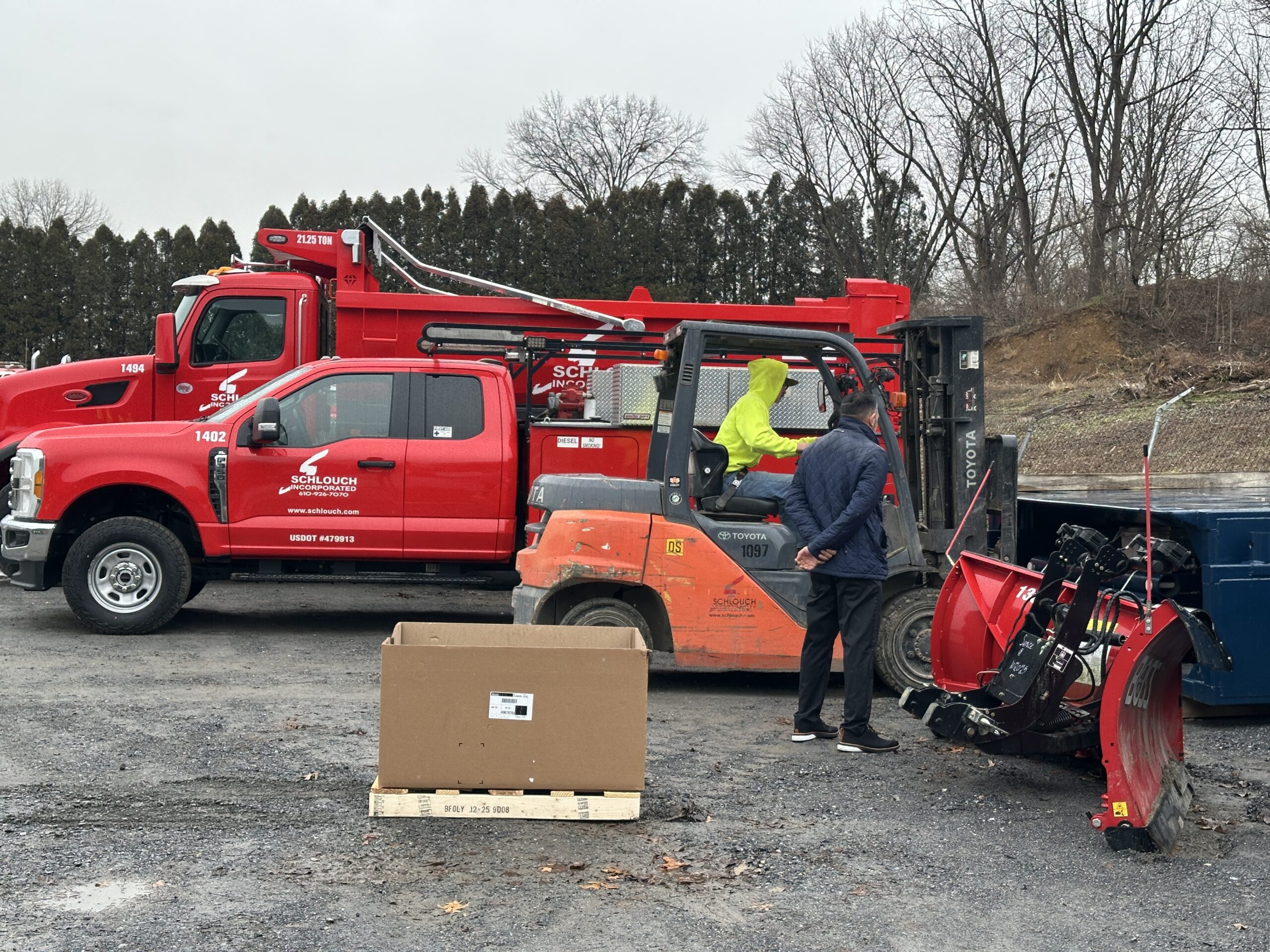
Schlouch Incorporated explores the essential elements of forklift training. From understanding vehicle stability to mastering load management, we break down exactly what is required to become a certified, safe, and efficient operator. Whether you are an employer looking to improve site safety or an aspiring operator ready to advance your career, understanding these protocols is the first step toward a safer work area.
Key Components of OSHA Forklift Training
Effective training is never one-dimensional. To truly master the equipment, operators must engage in a comprehensive learning process that blends academic knowledge with physical application. OSHA forklift training is typically structured into three distinct phases to ensure total competency.
Classroom Theory
The journey begins on the machine. Classroom instruction provides the foundational knowledge necessary for safe operation. Instructors cover the physics of the lift, including the “stability triangle,” load centers, and the specific limitations of different forklift classes.
This theoretical phase also covers the legal side of things, ensuring operators understand their responsibilities under federal law.
Hands-On Practice
Theory serves little purpose without application. The practical portion of the training puts the operator in the driver’s seat under the supervision of a qualified instructor. This isn’t just about making the machine move; it’s about developing muscle memory for controls, steering response, and maneuvering in tight or hazardous spaces.
Written and Practical Exams
Certification isn’t a participation trophy. To become a qualified operator, trainees must pass a written test that proves their understanding of safety principles. Following this, a practical driving assessment evaluates their ability to operate the forklift in a real-world setting. Only by passing both can an operator receive their certification.
Comprehensive Safety Training
Safety is the core of OSHA forklift training. While efficiency is important for production, it never takes precedence over the crew’s well-being. The curriculum is designed to create a culture of safety that aligns with OSHA regulations.
Regulatory Compliance
Navigating the overlap between OSHA can be complex. Training programs clarify which standards apply to specific environments. Operators learn the legal requirements for their specific site, ensuring that the company remains compliant and, more importantly, that the workplace remains safe.
Accident Prevention and PPE
The best accident is the one that never happens. Training focuses heavily on preventative measures, such as maintaining safe speeds, using horns at intersections, and understanding pedestrian right-of-way. Furthermore, operators are trained on the necessary Personal Protective Equipment (PPE) — from hard hats to high-visibility vests — required to operate the machine safely.
Emergency Protocols
Despite best efforts, emergencies can occur. A critical component of the training involves preparing for the worst-case scenarios. Operators learn how to react if a forklift begins to tip over (don’t jump; brace and lean away from impact), how to handle hazardous material spills, and how to execute emergency shutdowns.
Operational Training
Operating a forklift requires mastering a unique set of controls and behaviors. Unlike automobiles, forklifts often steer from the rear, which changes the turning radius and swing of the vehicle entirely.
Controls and Steering
Training breaks down every lever, pedal, and switch. Operators learn how to manipulate the mast — tilting and lifting with precision. They also master steering techniques that help prevent tail-swing accidents, a common cause of damage in tight warehouse aisles or crowded construction zones.
Surface Conditions
A forklift handles very differently on a smooth concrete floor versus a gravel construction site. OSHA forklift training prepares operators for these variables. They learn how to assess surface integrity, handle gradients and ramps, and adjust their driving style to prevent traction loss or instability on uneven ground.
Load Handling Best Practices
Picking up a pallet might seem simple, but incorrect load handling is a leading cause of tip-overs and dropped loads.
Safe Stacking and Unstacking
There is a science to building a stack. Operators are taught how to approach a stack squarely, lift the load straight up, and lower it smoothly. They learn the importance of interlocking loads for stability and how to unstack materials without destabilizing the remaining pile.
Weight Limits and Calculations
Every forklift has a data plate indicating its capacity. Training ensures operators know how to read this plate and, crucially, how to calculate the capacity based on the load center. A 5,000-pound capacity lift cannot handle a 5,000-pound load if the weight is centered too far out on the forks. Understanding this math is vital for preventing catastrophic equipment failure.
Inspection and Maintenance
A safe operator needs a safe machine. OSHA protocols mandate that forklifts be inspected before they are used.
Pre-Operation Checks
Before the engine starts, the inspection begins. Operators are trained to conduct a walk-around check, looking for fluid leaks, tire damage, and mast chain issues. They check hydraulic hoses for wear and ensure that all safety devices, like seatbelts and backup alarms, are functional.
Refueling and Charging
The energy source itself presents hazards. For internal combustion lifts, operators learn safe refueling protocols to prevent fires. For electric lifts, training covers battery maintenance, including the safe handling of battery acid and the correct procedures for connecting and disconnecting chargers to avoid arcing.
Certification and Retraining
Certification is a snapshot of competency, but skills must be maintained.
Validity Period
A forklift certification is generally valid for three years. However, this is not a “set it and forget it” credential. The industry evolves, and keeping skills sharp is necessary for long-term safety.
Requirements for Retraining
While the standard interval is three years, specific events trigger immediate retraining. If an operator is involved in an accident, is observed operating the vehicle unsafely, or is assigned to a different type of forklift they haven’t used before, refresher training is mandatory. This ensures that complacency doesn’t set in and that skills remain adapted to current equipment.
Build Your Career with Schlouch Incorporated
Mastering OSHA forklift training is more than just a regulatory hurdle; it is a commitment to professional excellence and safety. By understanding the mechanics of the machine, the physics of the load, and the rules of the job site, operators ensure everyone goes home safe at the end of the day.
At Schlouch Incorporated, we believe that high-quality training is the foundation of a successful construction career. We are dedicated to maintaining the highest safety standards in the industry.
If you are looking for a rewarding career in construction where safety and skill development are top priorities, we want to hear from you. Check Schlouch Incorporated’s current opportunities and join a team that builds with integrity.